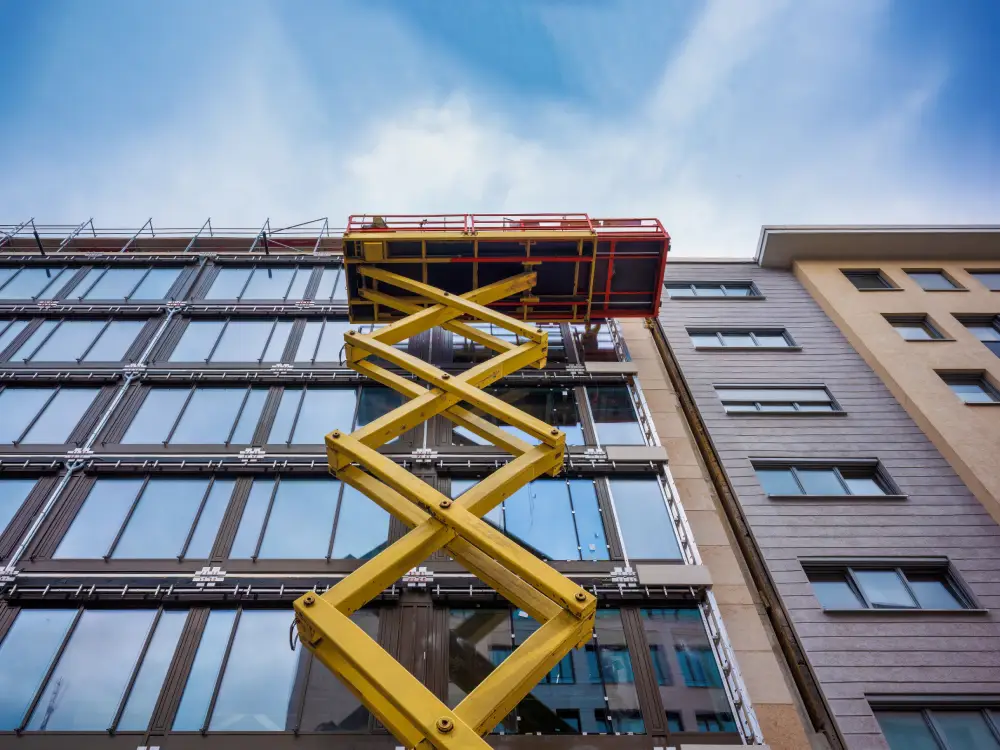
Choosing between renting or buying a scissor lift depends on how frequently the equipment is used and the type of tasks it supports. By comparing basic factors such as cost, usage duration, and maintenance, users may find a method that suits their work process and budget.
Frequency of use:
For short-term projects or occasional jobs, renting a scissor lift may be the more suitable option. It allows access to the equipment only when compulsory, without committing to long-term storage or maintenance. Instead, businesses that operate with regular or daily use might consider buying as it avoids repeated rental charges.
Budget and cash flow:
Purchasing a scissor lift involves a high upfront cost. While this becomes an asset to the business, it also ties up capital. Renting, instead, spreads the cost over time, which may be more manageable for small companies or contractors working with tight budgets. Rental also avoids depreciation.
Maintenance and repairs:
Renting a scissor lift usually includes basic servicing as part of the agreement. This reduces extra tasks for the business and may prevent downtime. If buying, the owner becomes responsible for all maintenance, inspections, and repairs, which may add to ongoing costs.
Storage and transport:
Ownership brings extra considerations such as where to store the scissor lift when not in use and how to move it between sites. Renting allows users to avoid these issues, as the lift is returned once the task is done. For companies without warehouse space or transport options, this can be more manageable.
Access to new models:
Rental services often supply newer models with updated features and safety standards. This allows businesses to use the latest equipment without investing in frequent upgrades. When buying, equipment may become outdated over time unless replaced, which may affect productivity or compatibility with certain jobs.
Project-specific requirements:
Different lifts suit different tasks. Renting gives the flexibility to choose models based on job height, weight capacity, or indoor/outdoor use. Buying one lift might limit the type of work it can support unless multiple units are purchased, which may not be practical for smaller companies.
Both renting and buying a scissor lift have advantages, depending on how the machine is used, the size of the business, and the budget available. By reviewing frequency of use, storage capacity, and cost, businesses can choose the method that aligns better with their ongoing necessities.
